
What Is a Jaw Crusher? Types of Jaw Crushers Explained

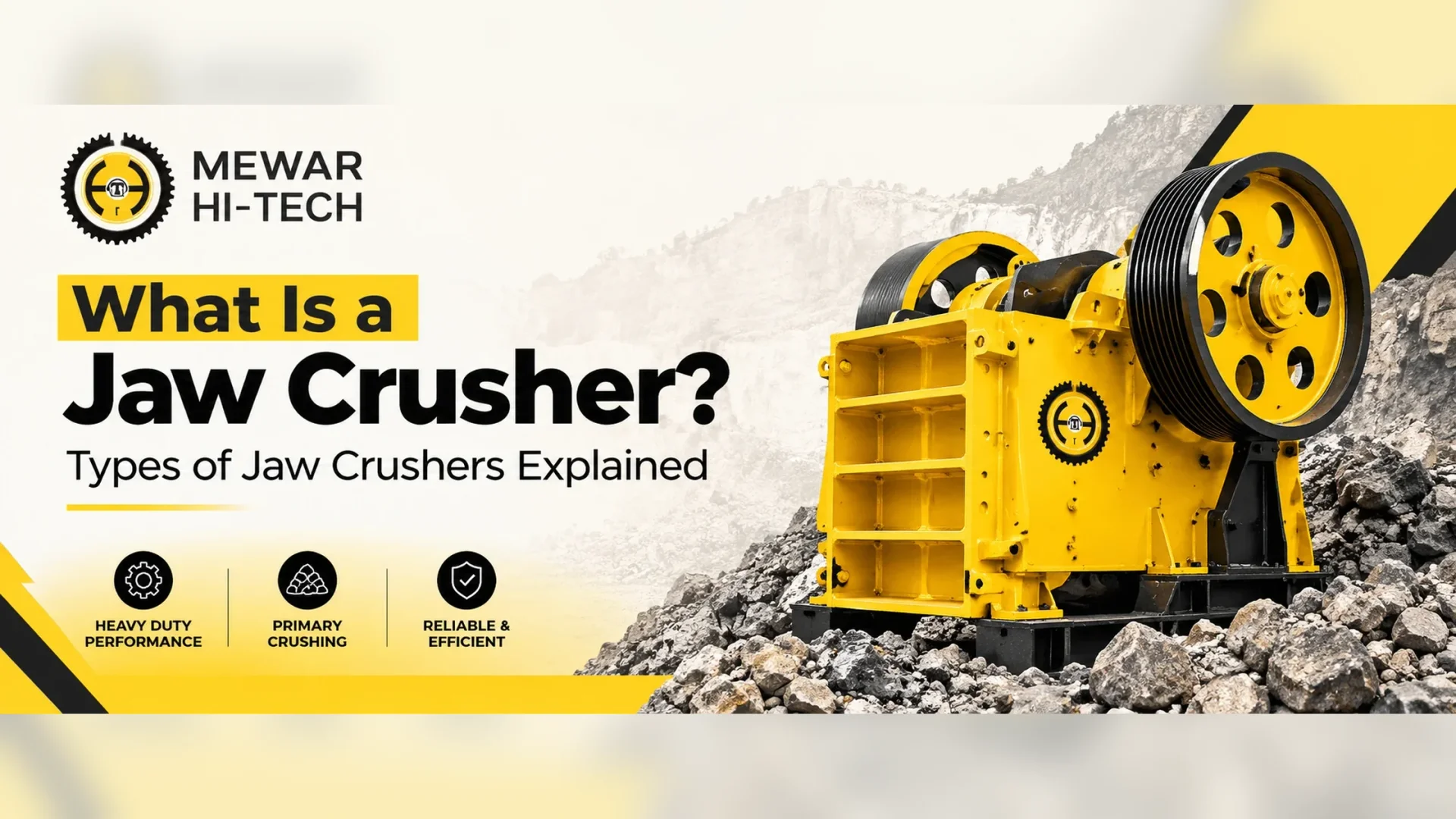
Crushing is an important stage in mining, quarrying and aggregate production. Large rocks and mineral deposits often need to be reduced into smaller pieces before they can be used for construction, further processing or transportation. A jaw crusher is one of the most widely used machines for this purpose because it can handle hard and abrasive materials in demanding working conditions.
Jaw crushers are commonly found in stone crushing plants, mines, construction projects and aggregate processing facilities. They are used to break down large rocks into manageable sizes before the material moves to the next stage of crushing or screening. Their strong construction and straightforward crushing mechanism make them suitable for many industrial applications.
However, not every jaw crusher is designed for the same operating conditions. Different models have different crushing mechanisms, capacities, feed openings and maintenance requirements. Understanding how a jaw crusher works and how its types differ can help plant operators, contractors and buyers choose suitable equipment for their production needs.
In this guide, we explain what a jaw crusher is, how it works, its main types, important components, common applications and the factors to consider when selecting a machine.
What Is a Jaw Crusher?

A jaw crusher is a primary crushing machine that reduces large rocks, stones and other hard materials into smaller pieces through compression. It uses two jaw plates to crush material: one jaw remains fixed while the other moves to create a crushing action.
Material enters the machine through the feed opening at the top and falls into the crushing chamber. As the moving jaw approaches the fixed jaw, the material is compressed and broken into smaller pieces. When the moving jaw moves away, the crushed material travels downward and exits through the discharge opening.
The final product size depends on factors such as the discharge setting, material properties and machine design. A jaw crusher is generally used for primary crushing, although its suitability depends on the requirements of the crushing plant.
Jaw crushers are widely used for processing granite, basalt, limestone, ores and other rock materials. They are valued for their ability to handle large feed sizes and their suitability for continuous industrial operations.
How Does a Jaw Crusher Work?
A jaw crusher works through a repeated compression cycle. Its drive system transfers power to the moving jaw, allowing it to crush material against the fixed jaw.
The basic working process includes these stages:
- Feeding: Large rocks enter the crushing chamber through the feed opening.
- Crushing: The moving jaw presses the material against the fixed jaw, breaking it into smaller pieces.
- Material movement: As the jaw moves away, the crushed material moves downward through the chamber.
- Discharge: Material small enough to pass through the discharge opening exits the machine.
- Repeat cycle: New material enters the chamber and the process continues.
The actual crushing performance depends on the feed material, moisture content, feed size, discharge setting and machine capacity. Consistent feeding and suitable operating settings help maintain efficient performance.

Main Components of a Jaw Crusher
Each component contributes to the crushing process, machine stability or safe operation.
| Component | Function |
| Fixed jaw plate | Provides the stationary surface against which material is crushed. |
| Moving jaw plate | Moves towards and away from the fixed jaw to crush material. |
| Crushing chamber | The space where the rocks are compressed and reduced in size. |
| Eccentric shaft | Helps create the movement of the jaw in many jaw crusher designs. |
| Toggle plate | Transfers force and supports the jaw mechanism; in some designs, it also provides a protective function. |
| Flywheel | Helps maintain smoother rotation and stores rotational energy. |
| Feed opening | The top opening through which raw material enters the machine. |
| Discharge opening | The lower opening through which crushed material leaves the chamber. |
The design and arrangement of these components vary between crusher models. Regular inspection is important because worn jaw plates and damaged mechanical parts can affect performance and increase downtime.