How a Stone Crushing Plant Works: Process & Equipment

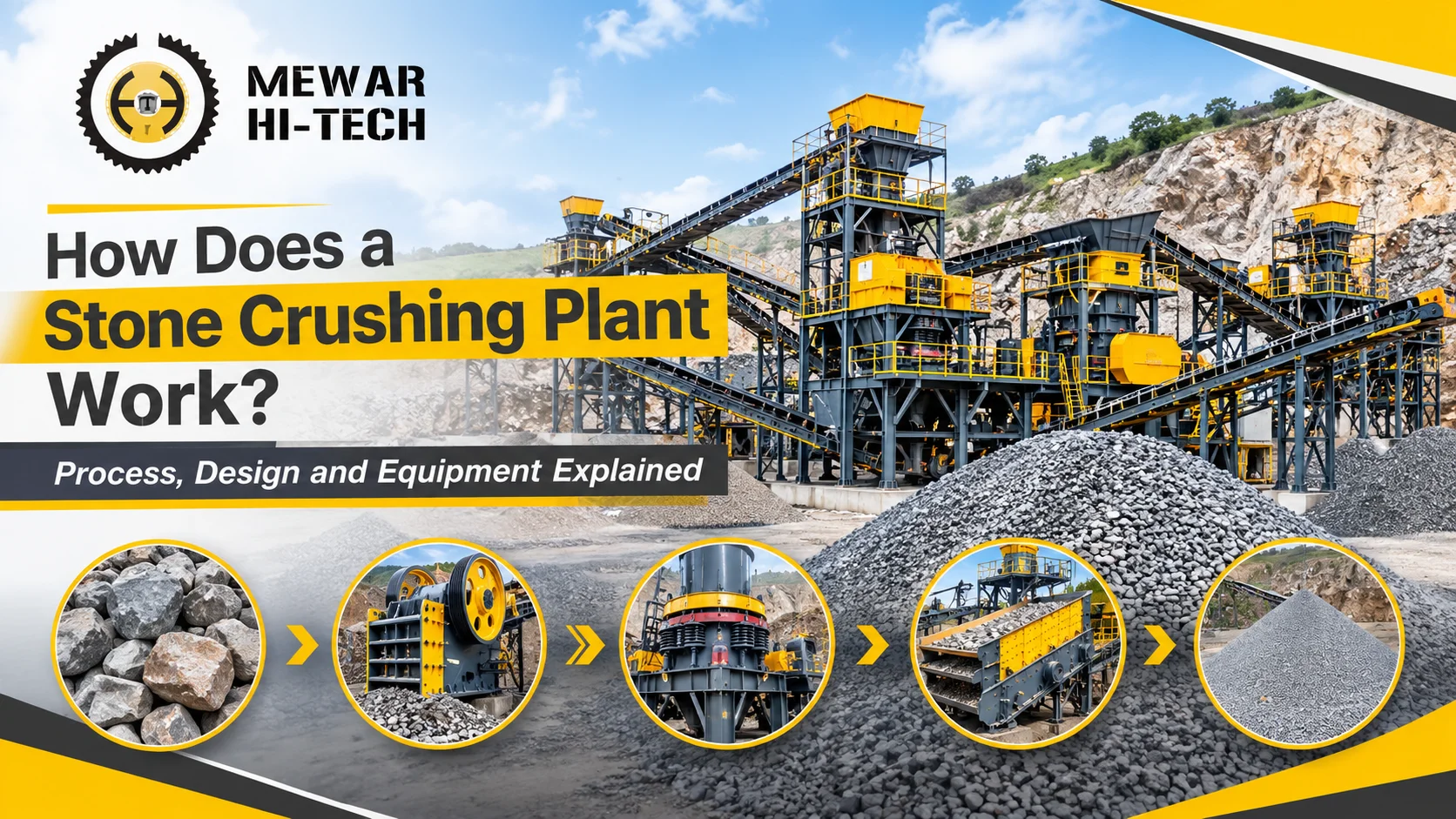
A stone crushing plant converts large rocks into smaller aggregates used in construction, road development, concrete production and other industrial applications. The process involves crushing, screening and transporting raw material until it reaches the required size.
Different machines perform specific tasks at each stage. The plant configuration depends on the type of stone, production capacity and final product requirements.
Understanding how a stone crushing plant works helps quarry owners, contractors, mining businesses and engineers select suitable machinery for their operations. A properly planned plant can maintain steady production, reduce material handling and produce aggregates in different sizes.
What Is a Stone Crushing Plant?
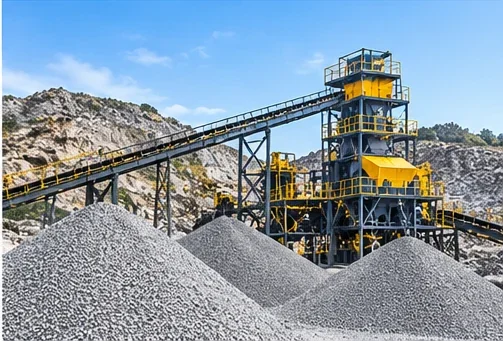
A stone crushing plant is an industrial setup used to process raw rocks into aggregates of different sizes. It combines crushing, screening and material handling equipment to prepare stones for construction and other applications.
The raw material may include granite, basalt, limestone, river stone and other minerals. Depending on the application, the plant can produce construction aggregates, road materials, stone dust and manufactured sand.
A typical stone crusher plant consists of a feeding system, primary crusher, secondary crusher, vibrating screen and belt conveyors. Some plants also include tertiary crushers and sand washing equipment when finer products are required.
Plant capacity is generally measured in tonnes per hour (TPH). Smaller plants may process a few dozen tonnes per hour, while larger industrial crushing plants can handle hundreds of tonnes depending on their configuration and operating conditions.
How Does a Stone Crushing Plant Work?
The stone crushing plant process begins when raw material enters the feeding system. Large rocks are reduced in size through different crushing stages. Screening equipment then separates the material according to the required aggregate sizes.
Step 1: Feeding Raw Material
Raw stones are loaded into a hopper using excavators or loaders. The hopper temporarily stores material and supplies it to the crusher through a feeder.
A vibrating feeder controls the material flow and helps maintain a consistent feed rate. Uniform feeding prevents sudden material surges that can affect crusher performance.
Depending on the plant arrangement, the feeder may also separate smaller particles before they enter the primary crusher.
Step 2: Primary Crushing
Primary crushing is the first major size reduction stage. Large rocks are processed through a primary crusher to reduce them into smaller pieces suitable for secondary crushing.
Jaw crushers are commonly used because they can handle large feed sizes and hard materials. They operate through compression between a fixed jaw plate and a moving jaw plate.
The feed opening and discharge setting influence the size of the material that can be processed. Primary crushing prepares the stone for the next stage.
Step 3: Secondary Crushing
After primary crushing, the material moves to the secondary crusher. This stage reduces the stone further and brings it closer to the required aggregate size.
Cone crushers and Horizontal Shaft Impactors (HSI) are commonly used for secondary crushing. Cone crushers are generally suitable for hard and abrasive materials, while impact crushers are selected when impact-based reduction and aggregate shape are important.
The selection depends on rock characteristics, feed size, required output and production targets.
Step 4: Screening and Material Separation
After crushing, the material passes through vibrating screens. Screening equipment separates aggregates according to their size using different screen openings.
A plant may produce 40 mm, 20 mm, 10 mm aggregates and stone dust. The screen arrangement determines the number of product sizes that can be separated.
Material larger than the required size may be returned to the crusher for further reduction. This arrangement is known as a closed-circuit crushing system.
Step 5: Tertiary Crushing
Tertiary crushing is used when the material needs further size reduction or when finer aggregates are required. VSI crushers and other suitable tertiary crushing machines may be installed after secondary crushing.
Vertical Shaft Impactors are frequently used for manufactured sand production and applications requiring improved particle shape. The final product depends on feed material, rotor speed, crusher configuration and operating conditions.
Not every stone crushing plant requires a tertiary crusher. Its installation depends on final product specifications and production requirements.
Step 6: Conveying and Stockpiling
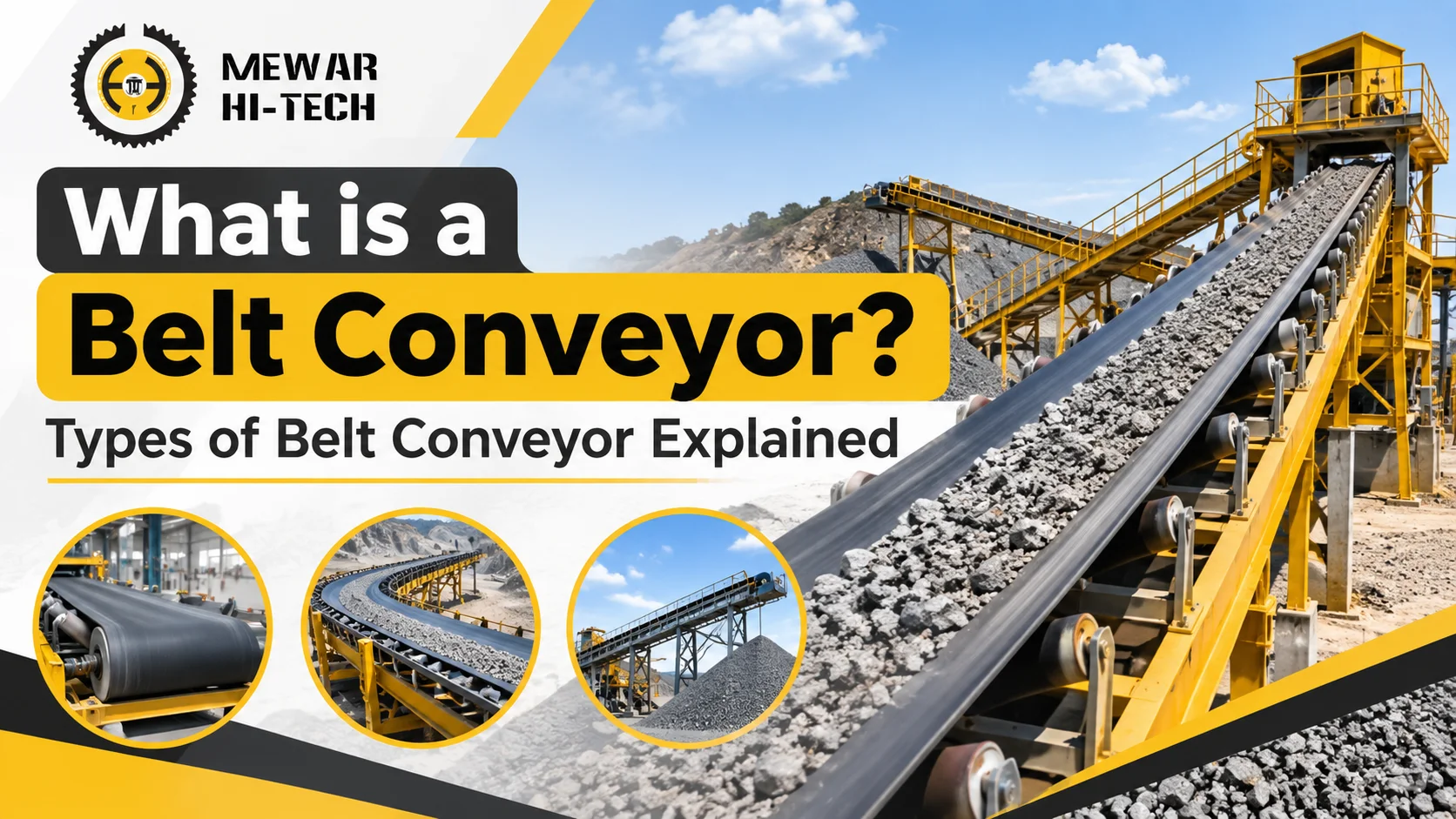
Belt conveyors transport material between crushers, screens and storage areas. They maintain continuous movement through the plant and reduce manual handling.
After screening, finished aggregates are transported to separate stockpiles according to their sizes. These products are supplied to construction companies, concrete manufacturers, road contractors and other buyers.
Major Equipment Used in a Stone Crushing Plant
Jaw Crusher
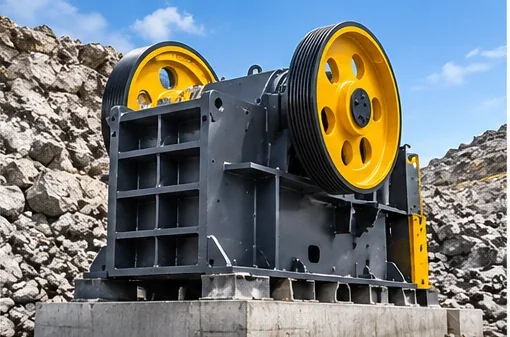
A jaw crusher is primarily used for crushing large rocks during the initial stage. Its compression-based crushing mechanism makes it suitable for processing hard stones and minerals.
The feed opening and capacity should match the material supplied by the feeding system. A suitable jaw crusher helps reduce large rocks without creating unnecessary bottlenecks.
Cone Crusher
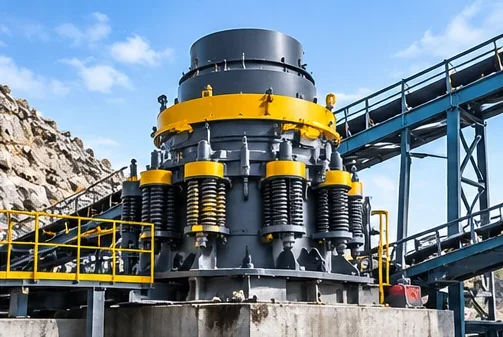
A cone crusher is commonly used for secondary and tertiary crushing. It compresses material between a moving cone and a stationary crushing surface.
Cone crushers are widely used in aggregate production, quarrying and mining operations. Crushing chamber selection and discharge settings influence the final product size.
Horizontal Shaft Impactor (HSI)
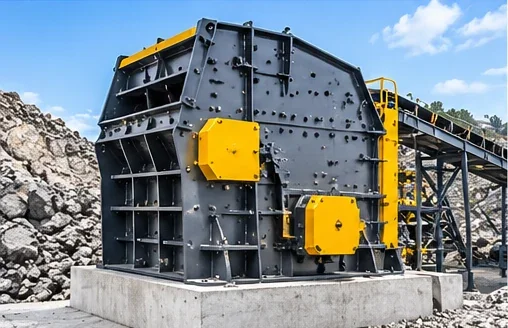
An HSI crusher uses rotating blow bars to strike material and break it through impact. It is suitable for processing limestone and certain other rocks where impact crushing can provide the required reduction.
The machine is often selected for aggregate production where final material shape and reduction ratio are important considerations.
Vertical Shaft Impactor (VSI)
A VSI crusher uses high-speed impact to reduce material. It is commonly used for tertiary crushing and manufactured sand production.
The machine can help produce fine aggregates with a more cubical shape, depending on the material and operating conditions. It is generally installed when smaller output sizes or improved aggregate shape are required.
Vibrating Screen
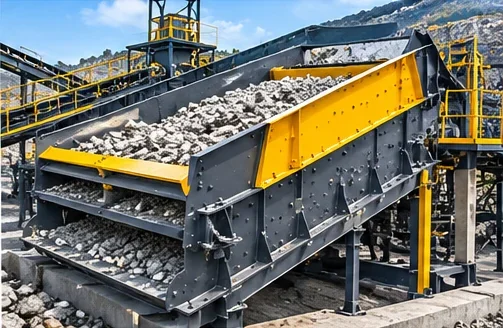
A vibrating screen separates crushed stone into different sizes. It controls product grading and directs oversized material back for further crushing.
Screen size, deck arrangement and mesh openings are selected according to the required output specifications.
Vibro Feeder and Belt Conveyor
A vibro feeder controls the quantity of material supplied to the crusher, while belt conveyors transport material between processing stages.
Both machines help maintain continuous material flow. Their capacity should match the crushers and screening equipment to avoid production interruptions.
Primary Crushing vs Secondary Crushing
Primary and secondary crushing perform different functions within the stone crushing plant process. The machines are selected according to feed size, required reduction and material characteristics.
| Parameter | Primary Crushing | Secondary Crushing |
| Purpose | Reduce large rocks into manageable sizes | Further reduce material |
| Feed material | Large raw stones | Smaller crushed stones |
| Common equipment | Jaw Crusher | Cone Crusher, HSI Crusher |
| Crushing method | Mainly compression | Compression or impact |
| Output | Coarse crushed material | Smaller aggregates |
| Application | Initial size reduction | Preparing material for screening or tertiary crushing |
The correct combination of primary and secondary crushers helps maintain a balanced production process and improves plant performance.
Stone Crusher Plant Design and Layout
Stone crusher plant design involves selecting machinery, arranging equipment and planning material flow according to production requirements. The layout should allow raw material to move smoothly from feeding to the final product stockpiles.
Material Flow and Equipment Arrangement
The feeder, crusher, screen and conveyor systems should be positioned to reduce unnecessary material movement. The layout should also provide enough space for maintenance and replacement of wear parts.
A poorly planned arrangement can create material bottlenecks and increase operating difficulties. Proper equipment placement supports an organised crushing operation.
Production Capacity
The required production capacity is one of the most important factors in plant design. A plant producing 100 TPH may require a different configuration from a plant designed for 300 TPH.
Capacity planning should consider feed material, crusher specifications, screening efficiency and operating hours. The crushing circuit should handle the required throughput without overloading individual machines.
Power and Site Requirements
Crushing machinery requires sufficient power to operate under load. Electrical systems, foundations and installation arrangements should be planned according to equipment specifications.
The available site area, storage space, access roads and conveyor routes also influence the overall plant layout. These factors should be reviewed before equipment installation.
What Factors Affect Stone Crushing Plant Efficiency?
The performance of a stone crushing plant depends on several operating and design factors. Rock hardness and abrasiveness influence crusher wear and production capacity. Feed size and material consistency affect how efficiently the crusher processes incoming material.
The crusher's discharge setting also plays an important role in determining output size. Smaller settings may produce finer material but can affect throughput and increase wear depending on the machine.
Screening efficiency is another important factor. Screen openings, feed distribution and material characteristics influence aggregate separation. Poor screening may affect the quality of finished products or send oversized material into the next stage.
Regular maintenance, suitable lubrication and timely replacement of wear parts help maintain machine performance. The feeder, crushers, screens and conveyors must also work at compatible capacities to avoid production interruptions.
Applications of Aggregate Crushing Plants
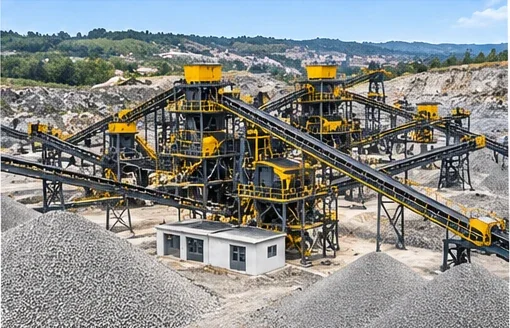
Aggregate crushing plants are used across several industries where processed stone is required. In road construction, crushed aggregates are used for road base, sub-base and asphalt production.
In concrete manufacturing, aggregates form an important part of the concrete mixture. Their size, grading and physical properties influence the quality of the finished material.
Mining and quarrying operations use crushing plants to reduce extracted rocks and minerals into smaller sizes for transportation or further processing. Manufactured sand plants also use crushing and screening equipment to produce fine aggregates for construction applications.
The type of crushing plant required depends on the material, final product specifications and production volume.
Choosing the Right Stone Crushing Plant Manufacturer
Selecting a stone crusher plant manufacturer requires careful consideration of machine specifications, manufacturing quality, application suitability and after-sales support. Buyers should evaluate whether the equipment can handle their feed material and meet the required production capacity.
The manufacturer should provide suitable machinery for different crushing stages, along with technical information regarding feed size, output, power requirements and operating conditions. Maintenance requirements and spare parts availability should also be considered before finalising the equipment.
Mewar Hi-Tech Engineering Limited manufactures crushing, screening, feeding and material processing machinery for quarrying, mining and aggregate production. Its product range includes Jaw Crushers, Cone Crushers, HSI Crushers, VSI Crushers, Roll Crushers, Vibrating Screens, Vibro Feeders and sand processing equipment.
Businesses planning a new aggregate crushing plant or upgrading an existing facility can explore equipment options according to their material and production requirements.
Planning an Efficient Stone Crushing Operation
A stone crushing plant works through connected operations that reduce raw rocks into aggregates of different sizes. Feeding, primary crushing, secondary crushing, screening, tertiary crushing and material handling are the main stages involved.
Plant performance depends on the correct selection of machinery, suitable design, consistent material flow and regular maintenance. Each machine must be selected according to feed material, production capacity and required output.
Understanding the stone crushing plant process helps businesses make informed decisions when planning a new facility or improving an existing crushing operation. A well-arranged crushing and screening plant can support consistent aggregate production for construction, quarrying, mining and infrastructure projects.