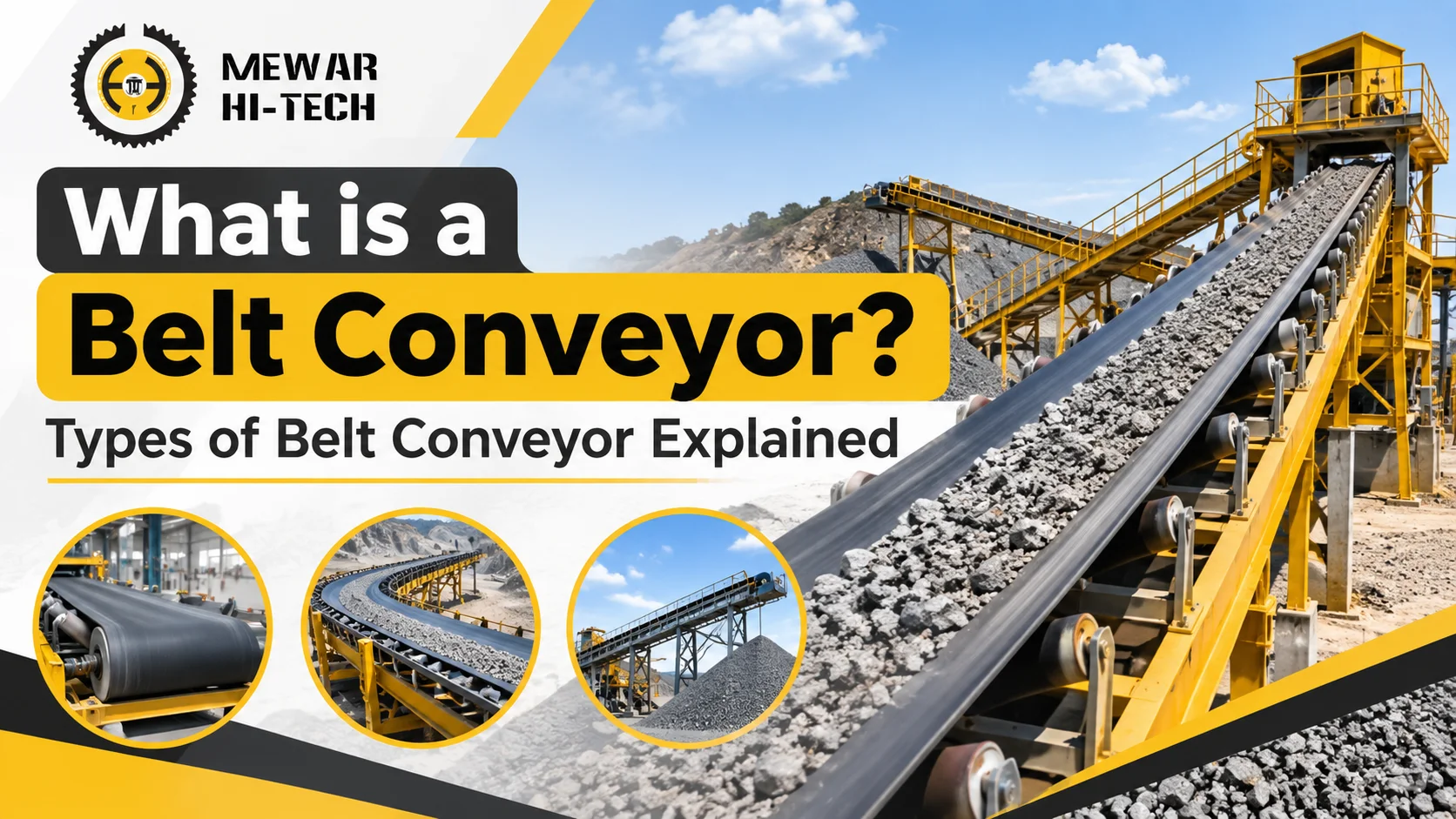
What is a Belt Conveyor? Types of Belt Conveyor Explained

Industries involved in mining, quarrying and aggregate production need reliable equipment to transport materials between different processing stages. A belt conveyor makes this movement easier by carrying stones, minerals and other bulk materials continuously from one machine to another.
In a stone crushing plant, conveyor systems connect feeders, crushers, vibrating screens and stockpiles. They help maintain a steady material flow and reduce the need for manual handling.
When choosing belt conveyor manufacturers in India, buyers should consider construction quality, belt width, carrying capacity, operating speed and plant requirements. Mewar Hi-Tech offers industrial belt conveyor solutions for crushing plants and mobile crushing units, with configurations based on material characteristics and site requirements.
What Is a Belt Conveyor?
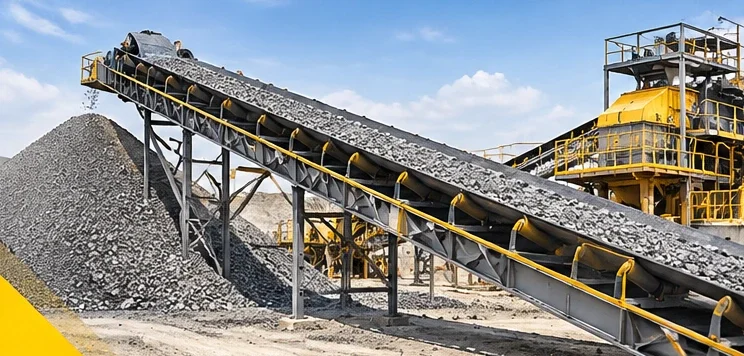
A belt conveyor is a mechanical material handling system that uses a continuously moving belt to transport materials between two or more locations. The belt moves around pulleys and is supported by rollers to maintain smooth movement.
These machines are commonly used in mining, quarrying, cement production and aggregate manufacturing. In crushing plants, they transfer raw materials towards crushers and carry processed stones to screening and storage sections.
The conveyor length, belt width and carrying capacity can be selected according to the production requirements. This makes the equipment suitable for both small processing facilities and large industrial plants.
How Does a Belt Conveyor Work?
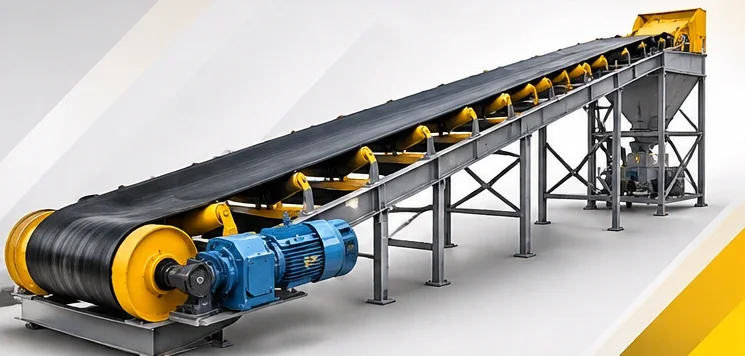
The working principle of a belt conveyor is based on the movement of an endless belt around drive and tail pulleys. An electric motor supplies power to the drive pulley, which moves the belt and carries the material placed on it.
Material enters through the loading point and travels along the moving belt until it reaches the discharge area. From there, it can be transferred to another machine or a stockpile.
Idler rollers support the belt during transportation, while the return section carries the empty belt back towards the loading point. This continuous movement allows the machine to handle materials throughout the production process.
Main Working Components
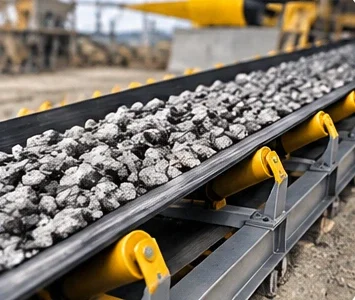
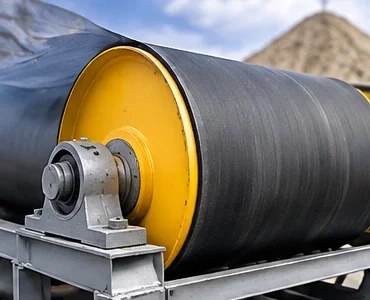
The drive pulley moves the belt using power from the motor, while the tail pulley guides it at the opposite end. Idler rollers support the carrying and return sections. The take-up arrangement maintains suitable belt tension, and the supporting frame holds the complete structure in position.
Different Belt Conveyor Types Used in Industries
Different belt conveyor types are available for specific material handling requirements. Their selection depends on transportation distance, material characteristics, plant layout and operating conditions.
Flat Belt Conveyor
A flat belt conveyor has a flat carrying surface and is commonly used for transporting packaged products, smaller components and certain materials over straight paths.
Troughed Belt Conveyor
A troughed belt conveyor uses specially arranged rollers to create a curved carrying surface. This design helps keep bulk materials towards the centre of the belt and reduces material spillage.
It is widely used in stone crushing and mining plants for transporting limestone, granite and crushed aggregates.
Inclined Belt Conveyor
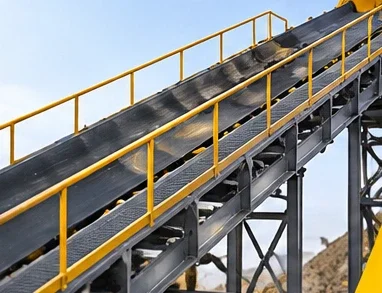
An inclined belt conveyor transfers materials between different height levels. It is useful when a crusher, screen or stockpile is located above the feeding point. The belt conveyor incline must be selected according to the material and operating conditions.
Portable Belt Conveyor
Portable conveyors can be relocated according to plant requirements. They are useful in mobile crushing operations and applications where material discharge locations change regularly.
Important Belt Conveyor Parts Name and Use
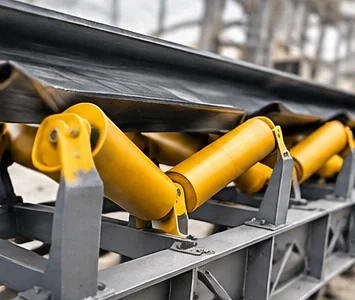
Understanding the belt conveyor parts name and use helps buyers identify the major machine components and their functions.
Conveyor Belt
The conveyor belt is the main carrying surface. It transports materials from the loading point to the discharge area. Its material and construction should match the weight, size and abrasiveness of the transported material.
Drive and Tail Pulley
The drive pulley receives power from the motor and moves the belt. The tail pulley is installed at the opposite end and guides the returning belt.
Idler Rollers
Idlers support the belt and maintain its position during operation. Troughing idlers are particularly useful for carrying bulk materials.
Electric Motor and Gearbox
The motor supplies the power needed for belt movement, while the gearbox controls the required speed and torque according to the conveyor design.
Take-Up Arrangement and Supporting Frame
The take-up arrangement maintains belt tension and helps prevent slipping. The supporting frame holds the machine components together and provides structural stability.
Understanding a Belt Conveyor Diagram
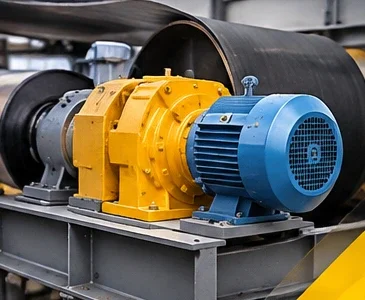
A belt conveyor diagram shows the arrangement of the machine's major components. It generally includes the drive pulley, tail pulley, conveyor belt, idler rollers, motor, gearbox, supporting frame and loading and discharge points.
The diagram helps engineers understand the direction of belt movement and how materials travel through the system. It is also useful when preparing plant layouts and planning equipment installation.
Before purchasing, buyers should check the conveyor dimensions and proposed arrangement to ensure that the machine fits the available space and connects properly with other equipment.
Important Conveyor Belt Specifications to Check Before Buying
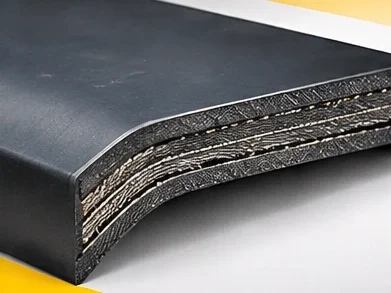
The conveyor belt specification determines whether a machine can handle the required material and production load. Buyers should evaluate the following technical factors before selecting equipment.
Belt Width and Operating Speed
Belt width determines the available carrying surface, while operating speed affects how quickly materials move. Both should be selected according to the required production capacity.
Carrying Capacity
Capacity is generally measured in tonnes per hour (TPH). The conveyor should handle the output of the connected crusher or screening machine without creating material handling delays.
Conveyor Length and Inclination
The conveyor length depends on the distance between feeding and discharge points. Inclination depends on the required elevation, material characteristics and belt design.
Belt Construction and Drive Power
The belt should have suitable abrasion and tear resistance, particularly when handling hard and sharp materials. Motor power should be calculated according to conveyor length, load, speed and inclination.
Mewar Hi-Tech provides different conveyor configurations for industrial material handling. Some of its listed technical specifications include:
| Belt Width | Speed | Trough Angle | Capacity |
| 500 mm | 1.25 m/s | 30° | 80 TPH |
| 650 mm | 1.6 m/s | 35° | 150 TPH |
| 800 mm | 2.0 m/s | 35° | 300 TPH |
These are listed equipment specifications. Actual performance depends on material characteristics, loading conditions and machine configuration.
Factors That Affect Belt Conveyor Price
The belt conveyor price depends on the machine's size, capacity, construction and operating requirements. There is no fixed price for every application because different plants require different conveyor arrangements.
Conveyor length and belt width influence the amount of structural material and belt required. Higher carrying capacities may also need suitable motors, gearboxes and stronger supporting components.
Belt quality is another important factor. When transporting crushed stones and abrasive minerals, the belt should be selected to handle regular wear.
Installation requirements can also affect the final cost. Straight, inclined and portable conveyors may require different structural arrangements.
Before requesting a quotation, buyers should share the required capacity, material type, conveyor length, belt width and discharge height. This information helps manufacturers suggest a suitable machine and provide a more accurate quotation.
Industrial Applications of Belt Conveyor Machines
A belt conveyor machine is used wherever regular movement of bulk materials is required. Its applications include several industrial sectors.
Mining and Mineral Processing
Mining facilities use conveyors to transport extracted minerals, ores and processed materials between different production stages.
Stone Crushing and Quarrying
In crushing plants, conveyors transfer raw stones from feeders to crushers and move crushed materials towards vibrating screens. They also carry finished aggregates to stockpiles.
Aggregate and Sand Manufacturing
Aggregate plants use conveyor systems to transfer different material sizes between crushing, screening and storage sections.
Construction and Recycling
Construction material facilities use conveyors for handling sand, aggregates and other bulk materials. Recycling plants use them to transfer materials between sorting, screening and storage operations.
Why Choose Mewar Hi-Tech for Belt Conveyor Requirements?
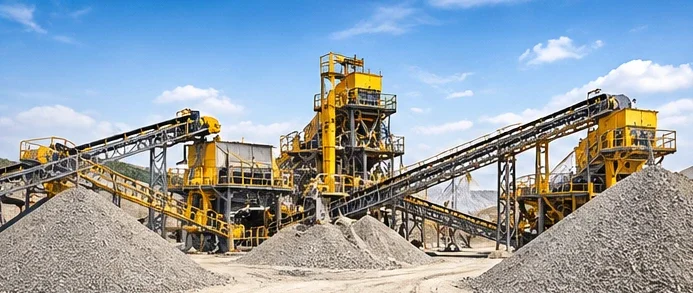
Selecting an industrial equipment manufacturer involves checking manufacturing capabilities, technical specifications and product suitability.
Mewar Hi-Tech Engineering Limited, based in Udaipur, Rajasthan, manufactures crushing, screening and size reduction equipment. Its product range includes belt conveyors and portable conveyors for regular crushing plants and mobile crushing units.
The company's conveyor design includes a rigid steel truss framework, weather protection guards, EP/NN rubber belts and three-roll troughing idlers. These components support material transportation in demanding industrial environments.
Conveyor configurations are selected according to transportation distance, material size, weight, shape and loading and discharge locations. This helps buyers identify equipment that suits their plant layout and production requirements.
For a new crushing plant or an existing facility, choosing a conveyor that matches the connected machinery is important for maintaining a consistent material flow.
How to Select the Right Belt Conveyor Manufacturer in India
Finding the right belt conveyor manufacturer in India requires checking more than the quoted machine price. Buyers should first understand their material handling requirements and compare manufacturers based on technical suitability.
Check the manufacturer's available belt widths, carrying capacities, structural design and drive arrangements. Ask for technical drawings and specifications to understand how the proposed equipment will fit into the plant.
It is also important to consider maintenance requirements and the availability of replacement components. Proper technical guidance during equipment selection can help avoid unnecessary problems after installation.
A suitable manufacturer should be able to recommend a conveyor based on actual site conditions rather than simply offering a standard machine.
Conclusion
A belt conveyor is an important part of material handling in mining, quarrying and stone crushing plants. It helps transport materials between different processing stages and supports continuous production.
Before purchasing, buyers should compare belt width, speed, capacity, construction quality and installation requirements. These factors help determine whether a conveyor is suitable for the intended application.
Mewar Hi-Tech offers industrial belt conveyor solutions for crushing plants and material handling operations. Contact Mewar Hi-Tech to discuss your requirements and request a suitable conveyor quotation.